Poetry · A way to begin
Luceafărul
Not translated into English
Mihai Eminescu · 1883
Synopsis
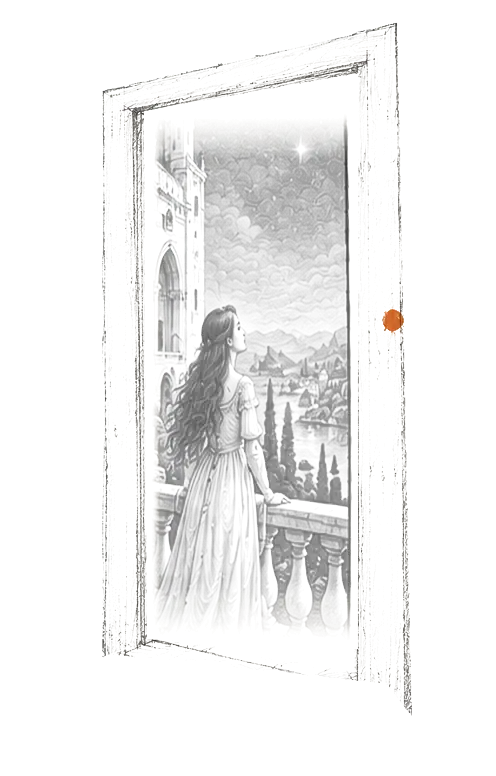
Every night, an emperor's daughter looks out of her window at the evening star and calls to it. It descends a first time into the sea, during her dream, and returns in the guise of a young man who offers her the empire of the ocean; she refuses to follow him. It returns a second time, born of the sun and the night, and she refuses again. She then asks him to become mortal; he accepts and flies to the Creator, at the edge of the world, to be released from his eternity.
Context
The poem appeared in April 1883 in the almanac of the academic society România Jună in Vienna, then in August in Convorbiri literare. It grew out of a version in verse that the author had made around 1873 from a Romanian tale published in German by Richard Kunisch in 1861. It has ninety-eight stanzas; Titu Maiorescu cut four of them in the autumn of 1883, a cut that editors have followed in different ways. Junimea had heard it read as early as April 1882.
Who it is for
A long poem in regular stanzas, drawn from a folk tale; translated into French under the title Hypérion.
Prizes and reception
Placed on the school curriculum in 1906, it has been translated into English by Corneliu Popescu, then by Leon Levițchi.