Novel
Gilgi
Gilgi — eine von uns
Irmgard Keun · 1931
Synopsis
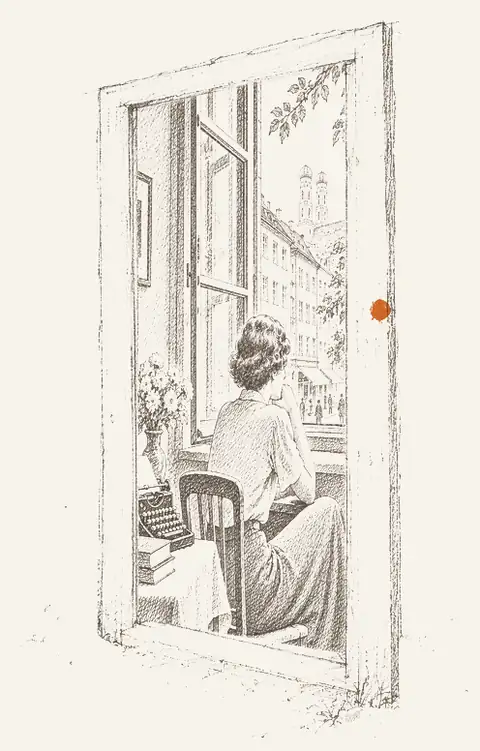
On the morning of her twenty-first birthday, Gilgi, a shorthand typist in Cologne who takes language classes and saves money so as to depend on no one, learns from her mother that she was adopted. She goes back from one woman to the next until she reaches the one who gave birth to her, a well-off bourgeoise. Then she meets Martin Bruck, twenty-one years her senior, a bohemian who lives on a small private income and spends without counting, and falls in love with him.
Context
The novel appeared in 1931 in Berlin and went through six printings within the year; the Social Democratic Vorwärts serialised it in 1932. The heroine's voice merges with that of the narrative, from Cologne speech to interior monologue, in the manner of the New Objectivity. Fallada hailed it as a courageous and honest book, and Tucholsky saw in its author a talent. It was adapted for the screen as early as 1932 and translated into French by Marcel Beaufils as early as 1933.
Who it is for
A short novel, carried by the voice of a young woman who thinks out loud, more than by what happens to her.
Prizes and reception
Thirty thousand copies in the year of its publication: the book that made its author famous overnight.