Novel
Siddhartha
Hermann Hesse · 1922
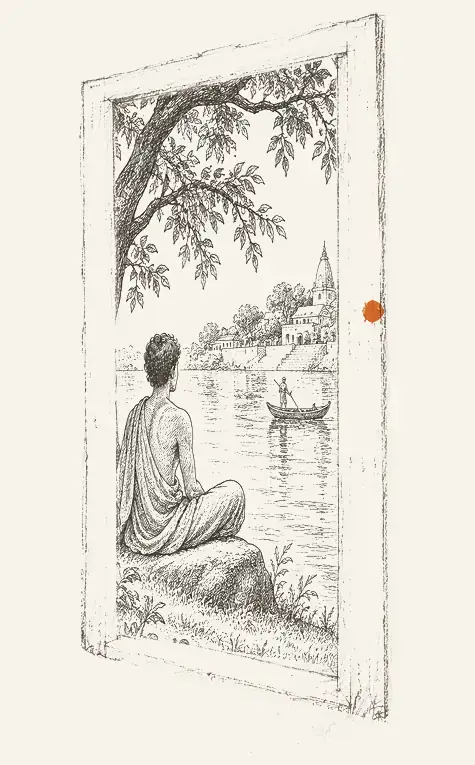
Synopsis
In the India of the Buddha's time, Siddhartha, a young Brahmin schooled in the Vedas, leaves his father's house with his friend Govinda to live among the samanas, wandering ascetics. The two meet Gotama, the Buddha; Govinda joins his disciples, but Siddhartha, convinced that the goal is not reached through a master's teaching, sets off alone again. A ferryman predicts his return; in the city, the courtesan Kamala tells him to become rich, and he enters the service of a merchant.
Context
The book was written at Montagnola in two stages, from December 1919 to May 1922; chapters first appeared in the Swiss press and in a journal, and the volume came out with S. Fischer in October 1922. Hesse dedicated the first part to Romain Rolland and the second to his cousin Wilhelm Gundert. Published in the United States in 1951, the book had a great influence there in the 1960s.
Who it is for
A short narrative, in a simple and lyrical language, following a man from his youth as a Brahmin to life in the world.
Prizes and reception
Published in French as early as 1925 in Joseph Delage's translation, reissued down to the present day; Conrad Rooks brought it to the screen in 1972.