Comedy
Carnival in Flanders
La Kermesse héroïque
Jacques Feyder · 1935
Synopsis
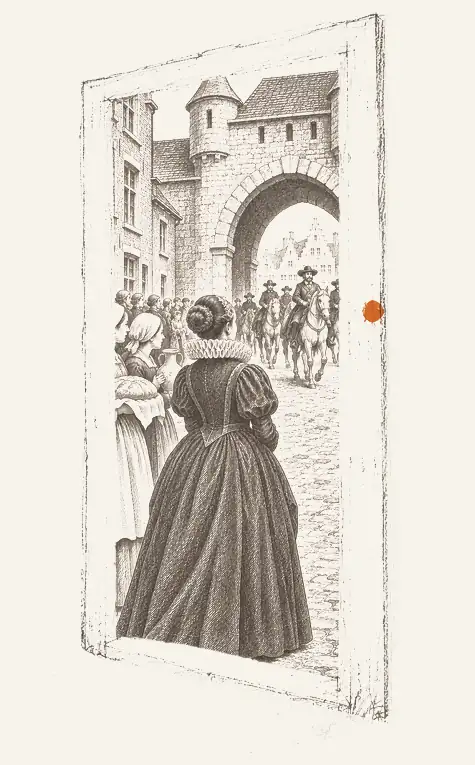
Flanders, 1616. The little town of Boom learns that a Spanish duke and his army are coming to spend the night there. The aldermen take fright, and the burgomaster decides to play dead to escape the soldiers. His wife, Cornelia, then takes matters in hand: with the women of the town, she organises the reception of the occupier, who proves more civilised than feared. The painter Bruegel the Younger is among the characters.
Context
The film, based on a short story by Charles Spaak, was produced by Films Sonores Tobis, which shot a German version at the same time; only Françoise Rosay appears in both. The Flemish village was built in the studio, and the costumes draw on Bruegel. Released in France on 3 December 1935, it won its director the prize for direction at Venice in 1936. In Belgium, it was reproached with ridiculing the spirit of resistance, and brawls broke out in cinemas in Antwerp, Ghent and Bruges.
Who it is for
A historical comedy with sound, in French, in seventeenth-century costumes inspired by the Flemish painters.
Prizes and reception
Awarded at the Venice Mostra in 1936, then by the New York critics in 1937, it also received the Grand Prix du cinéma français.