Bosnia and Herzegovina / All works
Poetry
Hasanaginica
Anonymous · 1774
Synopsis
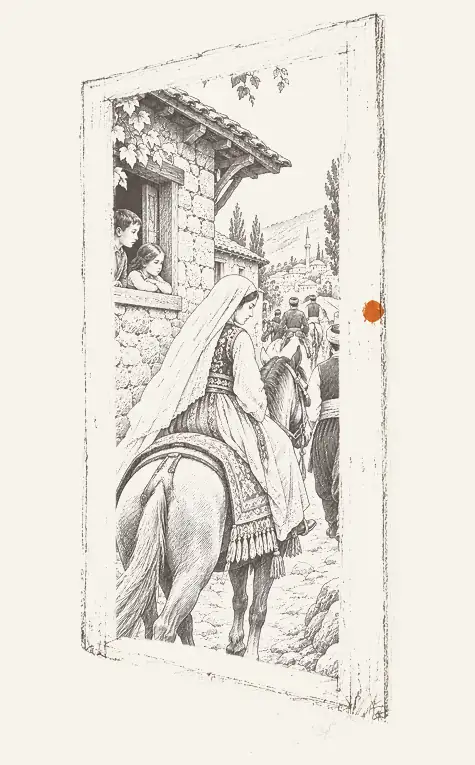
Wounded after a battle, Hasan-aga waits in vain for a visit from his wife, who does not come to see him. Furious, he has her brother bring her the order to leave the castle without their children, together with the deed of divorce. Driven out despite her pleas, she is promised by her brother to a rich kadi. Before the wedding, she asks for only one thing: a long veil, so as not to see her children when the procession passes before her former home. The fault she is reproached with is never fully explained.
Context
Published in 1774 with an Italian verse translation, the poem of ninety-two decasyllables was more successful than the book that contained it. Goethe translated it around 1775 and Herder included it in 1778 in his Volkslieder; Walter Scott, Nodier, Mérimée, Nerval, Tommaseo and Pushkin translated it in turn, and it is counted today in more than forty languages. It belongs to the common heritage of Bosnian, Croatian and Serbian letters, and its share of reality is still debated, the Arapović family having indeed owned lands at Zagvozd.
Who it is for
About a hundred lines to be read in one sitting, for discovering the oral poetry of the Balkans through its most famous text.
Prizes and reception
Its translation by Goethe made it known throughout Europe from the eighteenth century, even before the songs collected by Karadžić.