Poetry
Martim Cererê
Not translated into English
Cassiano Ricardo · 1928
Synopsis
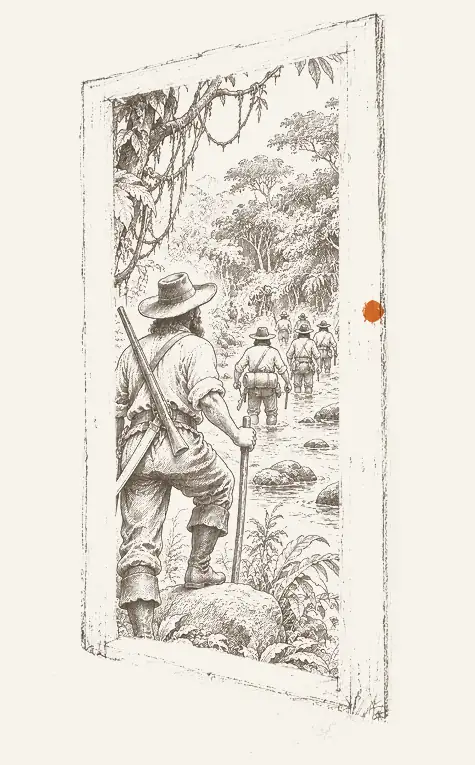
The book tells, in poems of varied forms and rhythms, the formation of the Brazilian people and of the national territory. It is arranged in six parts: the land and the Indians, the White man, the Black man, then the bandeirantes, those “giants in boots” who set out for the interior, the European immigrant, presented as a fourth race, and the modern capital of São Paulo. At the centre stand the figures of the great bandeirantes, from Borba Gato and Anhanguera to Fernão Dias and Raposo Tavares.
Context
According to the journal Anos 90, the book went through six editions from 1927 to 1936, profoundly reworked, from forty-two to sixty poems depending on the version; the first illustrated edition, by Di Cavalcanti, appeared in 1928 with the subtitle “the Brazil of children, poets and heroes”. Representative of Verde-Amarelo nationalism, it supplied the myth of the bandeirantes that the Bandeira movement and the discourse of the Estado Novo later took up. According to the town hall of its author's birthplace, it is the only one of his books that has never ceased to be reissued.
Who it is for
An easily accessible collection, whose national vision is best read with its date in mind; it has no French translation.
Prizes and reception
Regarded by critics as the poet's modernist masterpiece, it enjoyed a publishing success rare in its day.
Sources for this page 4
The pages consulted to check this page.