Poetry
Да бъде ден!
Not translated into English
Hristo Smirnenski · 1922
Opening lines
Нощта е черна и зловеща,
нощта е ледна като смърт.
В разкъсаната земна гръд
струи се бавно кръв гореща.
The night is black and ominous,
the night is icy as death.
In the torn breast of the earth
hot blood slowly streams.
Translation by Erostrate
Text quoted from bg.wikisource.org
Synopsis
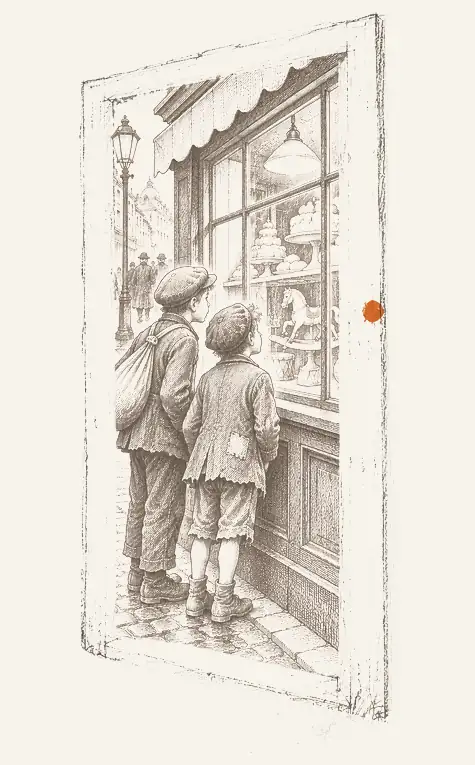
Let There Be Day!: the poem that gives the book its title shows a black, menacing night, cold as death, where the one-eyed demon of war passes among the smoking ruins and where thousands of men, driven by the fury of the god of gold, beg for light. The cycle of the city's children then follows, at nightfall, Gavroche's little brothers, caps pulled over their eyes at street corners, before lit-up shop windows that they can only look at.
Context
The book appeared in February 1922 from Osvobojdenie, the workers' publishing cooperative. Kalina Lukova reads his cycle Detsata na grada as a poetry of the night, in which the old musician, Gavroche's brothers, the woman of the street and the flower seller are the social figures of the city. The Lithuanian encyclopaedia notes mythological, biblical and fairy-tale motifs in the author, and regards him as the first to depict proletarian revolutionaries in Bulgarian, between late Symbolism and Socialist Realism.
Who it is for
Musical poems, to be read one by one and best spoken aloud; no French or English translation of the collection has been found.
Prizes and reception
The first print run, of fifteen hundred copies, sold out quickly, and the book was reissued within the year.