Novel · A way to begin
The Villagers
Huasipungo
Jorge Icaza · 1934
Synopsis
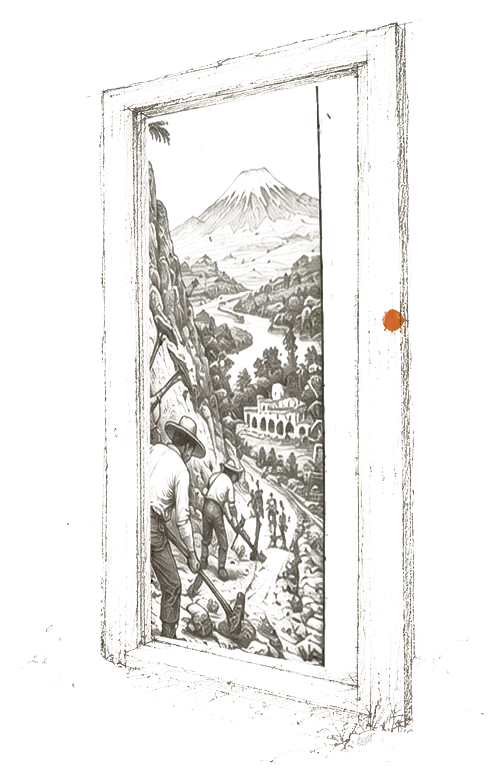
Don Alfonso Pereira, an indebted landowner from Quito's high society, is persuaded by his uncle Julio, his creditor, to open a road across his hacienda of Cuchitambo, whose timber an American, Mr. Chapy, wants to exploit. He settles there with his wife and daughter and puts the Indians to forced labour, with the priest and the teniente político as accomplices. Among them, Andrés Chiliquinga watches the road advance over the bodies of his own people, while the threat to the huasipungos, the plots where the families live, grows clearer.
Context
The novel appeared in Quito in 1934. Its title, from the Quechua wasipunku, “door of the house”, designates the plot of land that a hacienda granted to an Indian family in exchange for its labour. The book made its author internationally famous, and he rewrote it twice afterwards, the 1960 version being regarded as definitive. It appeared in French as early as 1938 from the Éditions sociales internationales, under the title La Fosse aux Indiens, reissued by Georges Pillement in 1946, and Bernard Dulsey produced the authorised English translation in 1964, The Villagers.
Who it is for
In Spanish, in a harsh language mixed with Quechua; the 1934 version is the most difficult, even for Spanish-speaking readers. There are many scenes of violence.
Prizes and reception
The most famous of the indigenist novels, translated into some forty languages, often compared to Les Raisins de la colère and regarded as a masterpiece of realism.
Sources for this page 5
The pages consulted to check this page.