Novel · A way to begin
Kokoro
こころ
Natsume Soseki · 1914
Opening lines
私はその人を常に先生と呼んでいた。
I always called him “Sensei”.
Translation by Erostrate
Text quoted from aozora.gr.jp
Synopsis
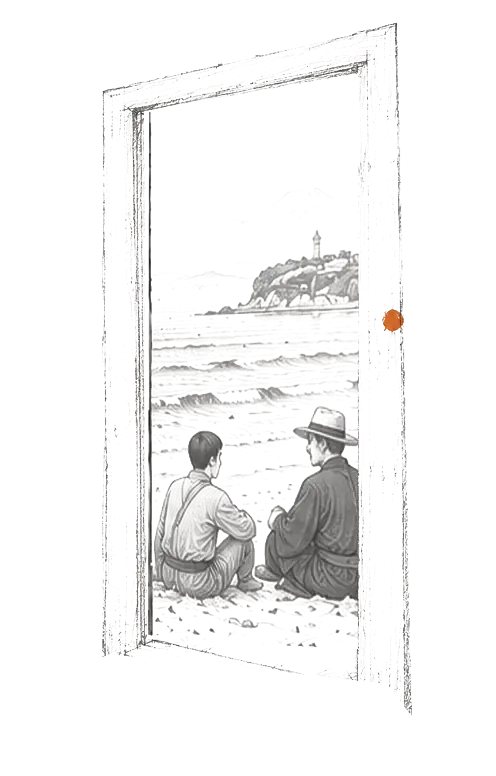
A student on holiday in Kamakura notices an older man on the beach, whom he eventually approaches and calls “Sensei”. Back in Tokyo, he visits him and learns that he goes to a grave every month; Sensei refuses to say who is buried there, and his wife, Shizu, hints at an old secret, according to a literary summary site. Called back to the provinces to his sick father, the student learns there of the death of the Meiji emperor, and it is there that a long letter from Sensei reaches him.
Context
The novel appeared as a serial in the Asahi Shimbun from 20 April to 11 August 1914, before being published in book form by Iwanami the same year. It has three parts: the first two are narrated by the young man, the third is the long letter in which Sensei tells of his past. The Japanese title means the heart, but also affection, the mind or resolve. The Encyclopædia Britannica places the book among those in which the author deals with isolation, guilt and betrayal, and the National Diet Library among his studies of the psychology of modern Japanese intellectuals.
Who it is for
A novel in three parts, the last of which consists of a single long letter, for those who like stories of silence and confession.
Prizes and reception
Translated into French as early as 1939, and into English by Ineko Kondo in 1941, then by Edwin McClellan and Meredith McKinney.
Sources for this page 4
The pages consulted to check this page.