East Timor
- works
- 6
- 6 books
- period covered
- 1934–1998
- language of writing
- Tetum and Portuguese
The leader of the Timorese guerrilla wrote poems in prison. Captured in 1992 after sixteen years in the bush, Xanana Gusmão was locked up in a Jakarta prison, where he continued to direct the resistance through clandestine messages while composing verse and painting. Released in 1999, he became his country's first president in 2002. Few nations have had for their first head of state a poet whom the occupier had sentenced to life imprisonment.
Read moreShow less
That configuration comes from a brief and violent history. A Portuguese colony for four centuries, East Timor proclaimed its independence in 1975 and was invaded nine days later by Indonesia, which occupied it for twenty-four years at the cost of about a third of the population. During that period the Portuguese language, forbidden in the administration, became the language of the resistance, and the Catholic Church the only space where Tetum could be used. The independence of 2002 made Portuguese and Tetum the official languages, an explicit political choice against the Indonesian that a whole generation had learnt at school.
The result is the slenderest corpus in the region and a culture that rests almost entirely on the oral. Fernando Sylvan, a Timorese poet settled in Portugal, published in 1963 a collection about his native country, and he remains the literary voice of reference. The country's own stock is elsewhere: in the lisan, customary knowledge transmitted by the sacred houses, in the narratives of origin, in the funeral songs. The founding myth recounts that the island is a crocodile that carried a child on its back and let itself be turned into land so that he could live there, which explains the prohibition on the animal.
What awaits the reader is a literature barely constituted and an almost intact oral tradition, the two answering each other more than succeeding one another. The collection that opens this page was written far from the country it names in its title.
A way to begin
A Voz Fagueira de Oan Tímor
Fernando Sylvan · 1993
The selection of poems that gathers what Fernando Sylvan, born in Dili, wrote about Timor.
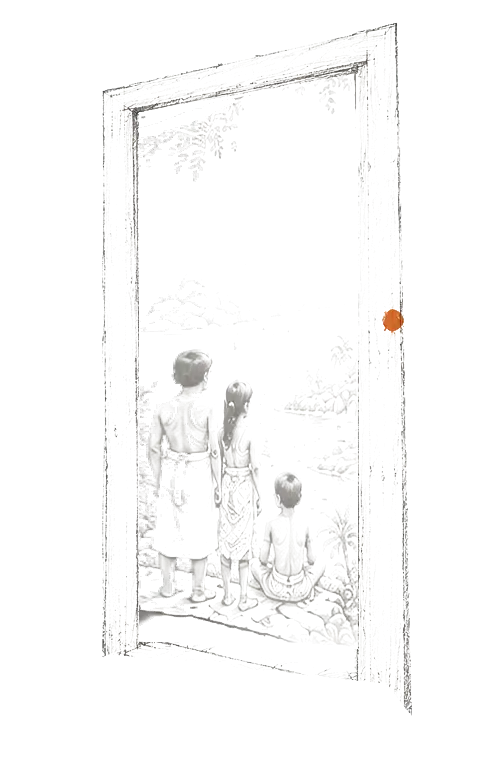
Children seek the sea and the beach, the sea teaches the poet space and time; other poems speak of the freedom of a people that does not die, the invasion of the island and the forests become places of prayer for those who fight. The book also gathers political poems and a cycle of love poems.
Timeline
- 1600–1900Lulik narrativesThe sacred narratives and house chants carry in Tetum the memory of the island's kingdoms.
- 1975–1999OccupationThe resistance produces a clandestine poetry, including what Xanana Gusmão writes in prison.
- 1999–2002IndependenceTetum becomes an official language alongside Portuguese and the country's written culture is rebuilt.
- 2003–2020Documentary and fictionDocumentaries and then the first features, among them A Guerra da Beatriz, tell of the occupation.
Reading keys
- Names are Portuguese, inherited from colonisation and from baptism, and coexist with Tetum or Fataluku names.
- Many Timorese bear a nom de guerre chosen during the resistance, and Xanana is one of those.
- The sacred house, uma lulik, is the kinship unit of reference, and one belongs to a house before belonging to a nuclear family.
- Several Timorese societies are matrilineal or practise the asymmetrical exchange of women between houses, which organises alliances and debts.
- The Indonesian occupation from 1975 to 1999, with its massacres including that of Santa Cruz in 1991, and the number of its victims are a central subject documented by a commission.
- Reconciliation with the Timorese who collaborated, and relations with neighbouring Indonesia, are delicate subjects.
- Lulik, the sacred and forbidden, bounds what may be said: certain knowledge belongs to a house and is not recounted outside it.
- The violence of 2006 between regions is an internal subject little approached.
- Catholicism concerns nearly the whole population, and the Church played a decisive political role during the occupation by offering a shelter and a language.
- Lulik designates at once the sacred, the forbidden and power, and it attaches to houses, to objects and to places.
- The ancestors are present and consulted, and funeral rites may extend over years until a second burial.
- The crocodile is a respected ancestor and not a dangerous animal, and it is not killed.
- Catholic mourning combines with customary rites, and the final ceremony, the kore metan, marks the lifting of mourning sometimes after a year.
- The tais, a woven cloth with patterns proper to each region, serves as a garment, a ceremonial gift and a shroud, and its patterns can be read.
- The sacrifice of animals, notably of buffalo, seals the alliances between houses and is publicly counted.
- 20 May, the restoration of independence in 2002, and 28 November, the proclamation of 1975, are two distinct dates, both commemorated.
- The myth of the ancestral crocodile, which explains the shape of the island and the prohibition on the animal, is the narrative of origin that everybody knows.
- The lisan, customary knowledge of the sacred houses, with their genealogies and their prohibitions, constitute the main oral stock.
- The narratives of the resistance, transmitted orally by the fighters, form a still living memory.
- The funeral songs and the ritual poems in Tetum are a recognised genre that written production is beginning to collect.
- East Timor is not an Indonesian province: it is an independent state, a former Portuguese colony, and the occupation lasted twenty-four years.
- Tetum is not a dialect of Indonesian but a distinct Austronesian language, strongly marked by Portuguese.
- The choice of Portuguese as official language is not colonial nostalgia but an explicit refusal of Indonesian.
- The slenderness of the written corpus does not measure the richness of an oral tradition that the sacred houses preserve.
Tales and mythologies 1
- NarrativeLafaek DiakAnonymous · 1934not translated into EnglishA legend about the birth of the island, told in the languages of the country, in which the crocodile is a grandfather.Literature
Available in English 2
The books from this country that can be read in English, in the original or in translation.
- PoetryBury My Heart on Mount RamelauEnterrem meu coração no RamelauAnonymous · 1982The poetry of the Timorese resistance, gathered in Luanda seven years after the Indonesian invasion.Literature
- NovelThe Crossing: A Story of East TimorCrónica de uma Travessia: A Época do Ai-Dik-FunamLuís Cardoso · 1997A Timorese youth under colonisation, then exile in Lisbon, following the story of a father.Literature
A selection to begin with 4 / 6
- PoetryBury My Heart on Mount RamelauEnterrem meu coração no RamelauAnonymous · 1982The poetry of the Timorese resistance, gathered in Luanda seven years after the Indonesian invasion.Literature
- NovelThe Crossing: A Story of East TimorCrónica de uma Travessia: A Época do Ai-Dik-FunamLuís Cardoso · 1997A Timorese youth under colonisation, then exile in Lisbon, following the story of a father.Literature
- NovelAndanças de um TimorensePonte Pedrinha · 1998not translated into EnglishThe exile of a deeply devout young Timorese man, between Ataúro, Darwin and Portugal.Literature
- PoetryMar MeuXanana Gusmão · 1998not translated into EnglishThe poems and paintings of the leader of the Timorese resistance, made in an Indonesian prison.Literature