Poetry
La ciega
Not translated into English
María Josefa Mujía · 1850
Synopsis
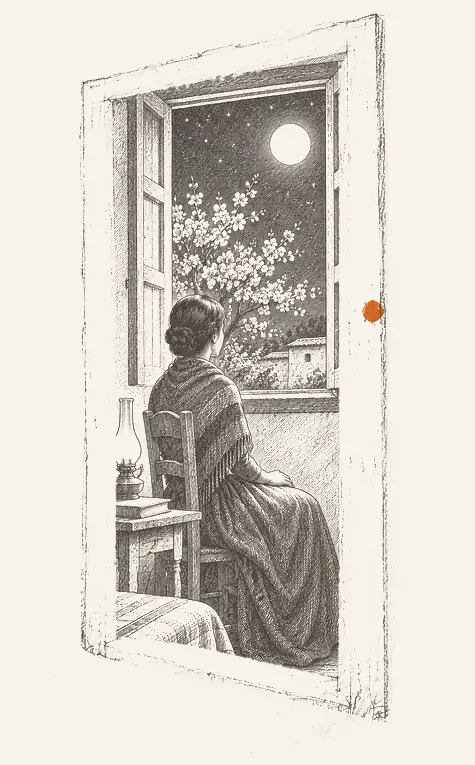
A woman struck blind in her youth speaks of the world she has lost: night everywhere, a black veil thrown over everything, the moon, the stars and the dawn made invisible, the colours erased. Her youth is a withered flower, her spring a winter, her life a prison, and grief has made her heart a throne. With her illusions flown, she is left with bitterness and the wait for death, while the loss of the visible world opens onto an inner world.
Context
The poem was dictated to her brother, who held the pen; he taught it to a friend, and the text appeared in 1850 in a Sucre newspaper, the Eco de la Opinión. It brought its author great renown, while the rest of her work circulated little and remained on the margins of the letters of her time. Other pieces followed, dated from Sucre between 1861 and 1884, including a poem about the tree of hope that Menéndez y Pelayo praised. It was not until 2009 that an edition of her complete works, compiled by Gustavo Jordán Ríos, brought together poems, prose, translations and letters.
Who it is for
A lyrical poem in Spanish, in rhymed stanzas, with no French translation; nothing to know in advance, except that the speaker has been blind since her youth.
Prizes and reception
The poem that made her famous in her lifetime and earned her, in Sucre, the nickname of lark of sorrow.
Sources for this page 2
The pages consulted to check this page.