Narrative · A way to begin
The Baburnama
Boburnoma
Zahiriddin Muhammad Babur · 1530
Synopsis
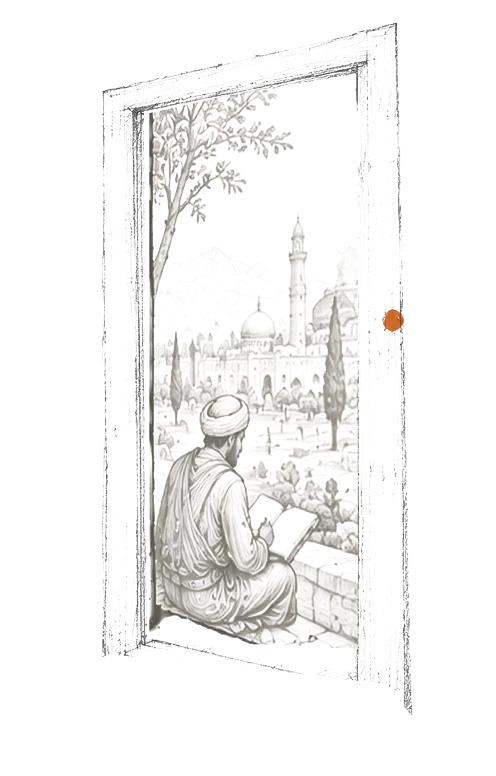
The memoirs of Babur, Timurid prince of Fergana who became founder of the Mughal Empire of India. In them he follows his life from 1494, the year he becomes king at the age of twelve: Samarkand taken and lost twice, exile, the conquest of Kabul, then the campaigns towards India. Between battles, he describes with a naturalist's curiosity the towns, peoples, plants and animals of the countries he crosses, and notes poetry, music and festivities.
Context
The book is written in Chagatai Turkic, which its author called Turki, in a prose steeped in Persian in which verses appear. It covers the years 1494 to 1529, with a gap from 1508 to 1519 in the manuscripts. It is at once chronicle, geography and natural history, and its pages on the flora and fauna of India have remained famous. At the court of Akbar, Abdul Rahim Khan-i-Khanan translated it into Persian in 1589 and 1590, and the emperor had illustrated copies made; the first English version, in 1826, was made from this Persian text.
Who it is for
In French since 1871, retranslated from the original text in 1980. A fragmentary narrative, to be read in pieces, the pages on the countries crossed as much as the battles.
Prizes and reception
Studied in textbooks in some twenty-five countries, it is held to be the first great example of autobiography in world literature.