Nigeria
- works
- 37
- 25 books · 12 films
- period covered
- 1600–1999
- language of writing
- English
In 1992, a trader from Onitsha found himself with a stock of blank video cassettes he could not sell. He decided to shoot a film on them. "Living in Bondage" tells of a man who sacrifices his wife to a sect in order to become rich and finds himself haunted by her. The film sold tens of thousands of copies in the markets, with no cinema, no distributor, no subsidy. Thirty years later, the country produces more feature films than almost anywhere else in the world.
Read moreShow less
That way of acting without waiting for permission has long characterised Nigeria. The country has more than five hundred languages, three large ensembles that share neither religion nor history, and a population such that an internal market exists for everything: the booksellers of Onitsha were selling locally printed popular novels as early as the nineteen fifties, long before criticism took an interest. Nigerian literature has never needed a European audience in order to live, and that can be heard in its self-assurance as much as in its indifference to propriety.
Hence an uncommon freedom of language. Amos Tutuola published in 1952 a fantastic narrative in an English that his educated compatriots judged faulty and that English writers admired. Achebe answered six years later with a novel of classical mastery about the destruction of an Igbo world, and set the model of the African novel. Soyinka received the Nobel in 1986. The price was political: Ken Saro-Wiwa, a writer and defender of the Niger delta against the oil companies, was hanged in 1995 after a hasty trial.
What awaits the reader is an abundance without hierarchy, in which video melodrama and the prize-winning novel come from the same country and sometimes from the same neighbourhood. The novel that opens this page follows a strong man of an Igbo village as the missionaries arrive, and more than twenty million copies of it have been sold.
A way to begin
Things Fall Apart
Chinua Achebe · 1958
More than twenty million copies, some fifty languages: the novel of an Igbo village as the missionaries arrive.
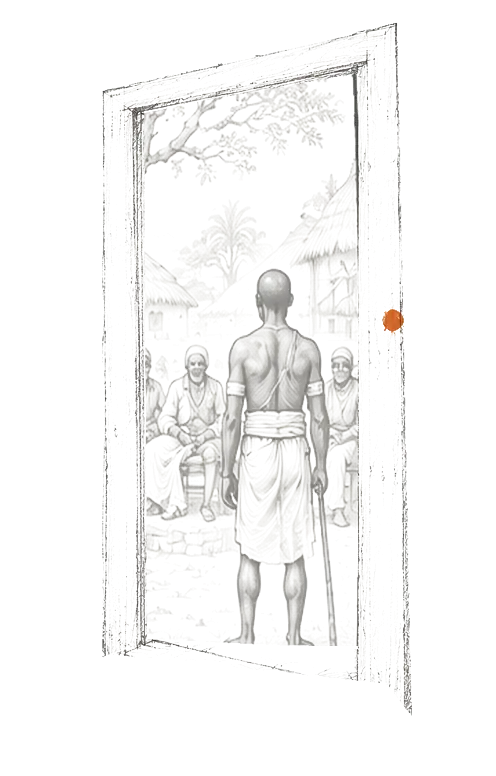
Okonkwo has made his name in Umuofia through wrestling and hard work, ashamed of a flute-playing father sunk in debt. He raises his family harshly, then kills a man by accident at a funeral and must go into exile for seven years among his mother's people. When he returns, a church has been built, a court judges in place of the elders, and his eldest son has gone over to the other side.
Timeline
- –1900Oral traditionsYoruba, Igbo and Hausa epics. A literature that is not written down.
- 1952–1960First novelsTutuola, then Achebe. Africa answers the colonial novels.
- 1960–1970Independence and BiafraSoyinka imprisoned, Achebe in exile. The war marks a generation.
- 1970–1990RecognitionSoyinka, first African Nobel, in 1986. Nollywood is taking shape.
Reading keys
- The name almost always indicates the group: Achebe, Okonkwo, Nwapa, Ekwensi are Igbo; Soyinka, Osofisan, Balogun are Yoruba; Alkali and the Hausa names come from the Muslim north.
- Yoruba first names are sentences: Oluwaseun means "thank God", Babatunde "the father has returned", the latter designating a child born after the death of the grandfather.
- Twins, ibeji among the Yoruba, have a sacred status and a carved double is dedicated to them if one dies.
- Polygamy and the hierarchy between co-wives structure many narratives, with a precise vocabulary for each position.
- The Biafra war, from 1967 to 1970, and the million dead it caused run through all Igbo literature, often through the childhood narrative.
- The oil of the delta, pollution and repression are the subject for which Saro-Wiwa was hanged.
- The division between a Muslim north and a Christian south is a permanent and dangerous subject.
- Secret societies and cults of wealth, a central theme of video cinema, are treated not as fantasy but as a social hypothesis.
- Three ensembles: Islam in the north, Christianity in the south with an explosion of Pentecostal churches, and Yoruba and Igbo cults beneath both.
- The Yoruba pantheon, with Ogun of iron, Sango of the storm, Yemoja of the waters, Esu of the crossroads, is the same as that of Cuba, Brazil and Haiti, exported by the slave trade.
- Ifa, a Yoruba divination system with its thousands of verses learnt by heart, is listed as intangible heritage and functions as an oral library.
- The Igbo chi, a personal spiritual double, determines destiny, and a character may have a bad chi without being at fault.
- White is the colour of the priests of Obatala and of the rites of purification, red that of Sango and of energy.
- The funeral of an elder is a costly and joyful celebration, with several days of ceremonies; that of a young person is silent and shameful.
- The Yoruba egungun masks embody the ancestors and their appearance suspends the ordinary order.
- The new yam festivals mark the beginning of the Igbo agricultural year and often serve as a narrative hinge.
- The Yoruba tales with Ijapa the cunning tortoise, and the Igbo tales with the tortoise and the hare, are the domestic stock.
- The Ifa corpus, its odu and its verses, is a learned reference that authors quote.
- Oduduwa coming down from the sky at Ile-Ife to found the Yoruba world is the shared myth of origin.
- The Hausa tales, published in Hausa as early as 1913, form the stock of the north.
- Tutuola's English is not badly learnt English but an avowed Yoruba English, and the debate it provoked in Nigeria is part of its interest.
- Video cinema is not a by-product: it is the dominant popular form, with its codes and its audience, and the country also produces an auteur cinema.
- The Yoruba cults are not survivals: they are alive in Nigeria and practised by millions of people in the Americas.
- The Biafra war is not a closed episode: it remains an active political subject.
Tales and mythologies 1
- PoetryThe Ifa CorpusIfáAnonymous · 1600The diviner learns thousands of verses by heart over ten to twenty years, and he does not choose what he recites: he casts, reads the figure, and says what comes.Literature
A selection to begin with 10 / 37
- NovelThe Palm-Wine DrinkardAmos Tutuola · 1952The country has more than five hundred languages and English is the only official one: to write in 1952 in an English that is not the English of the schoolroom first passes for a mistake.Literature
- NovelThe Only SonJohn Munonye · 1966An Igbo village in the early days of colonial administration, where a mother on her own must choose between keeping her son with her and entrusting him to the mission school.Literature
- NovelThe ConcubineElechi Amadi · 1966A village in the east of the country before the Europeans appear there, where diviners, charms and water spirits govern lives as surely as the seasons.Literature
- NovelSeason of AnomyWole Soyinka · 1973The country is emerging from a thirty-month civil war whose dead number in the millions, and the writers who lived through it are all writing then about what they saw.Literature
- CinemaBisi, Daughter of the RiverJab Adu · 1977Between a coastal village where one still owes one's person to the water deities and the Lagos of offices and business, a young woman makes a choice and pays for it.Cinema
- CinemaThe MaskEddie Ugbomah · 1979Two years after the great festival in Lagos, where the country had asked in vain for the mask that had become its emblem, a film sets out to return it by the only route left, that of fiction.Cinema
- CinemaOrun MooruMoses Olaiya Adejumo · 1982Nigeria in the years of easy money, where the promise of quick enrichment is sold on the street corner, seen through the country's most popular comic character.Cinema
- Short storiesAfrica Kills Her SunKen Saro-Wiwa · 1989Public executions of armed robbers, shot in front of the crowd, are then a regular practice in the country, and the press publishes photographs of them.Literature
- CinemaLiving in BondageChris Obi Rapu · 1992The country no longer has working cinemas, and the video cassette sold in the markets becomes the only way a film has of finding its audience.Cinema
- CinemaTi Oluwa Ni IleTunde Kelani · 1993Sacred land sold off to oilmen and the wrath of the gods: Tunde Kelani's first film.Cinema