Novel · A way to begin
Death Is Called Engelchen
Smrť sa volá Engelchen
Ladislav Mňačko · 1959
Synopsis
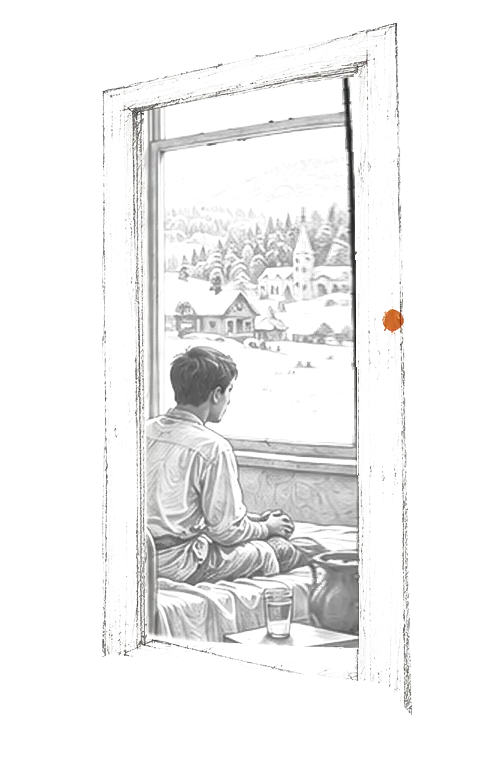
At the end of the war, the young partisan Voloďa, struck in the back, wakes up with no sensation in his legs. In hospital, where a doctor and the nurse Eliška help him recover, he relives his life as a partisan: the hamlet of Ploština, whose inhabitants protect his group, and his liaison with Marta, a Jewish woman who obtains information from influential Germans. Facing the partisans comes a hunting commando equipped with dogs, led by Otto Skorzeny and his deputy Engelchen, “little angel”, whose name also means death.
Context
The novel appeared in 1959 from the Slovak political publishing house and probably rests on the author's experience as a partisan. It was translated as early as 1961 by Artia, in Prague, into English by George Theiner and into French, from the Czech, by Yvette Joye. Elmar Klos and Ján Kadár made it into a film in 1963, which they co-wrote, awarded a prize at the third Moscow International Film Festival; the directors and the author received a State Prize for it in 1964. The Lithuanian encyclopedia describes it as a psychological novel about the uprising of 1944.
Who it is for
A war novel made of flashbacks to the life of the partisans, which can also be read in translation since 1961.
Prizes and reception
Translated into French and English two years after its publication, then adapted for the cinema and awarded a prize in Moscow.