Novel · A way to begin
Doña Barbara
Doña Bárbara
Rómulo Gallegos · 1929
Synopsis
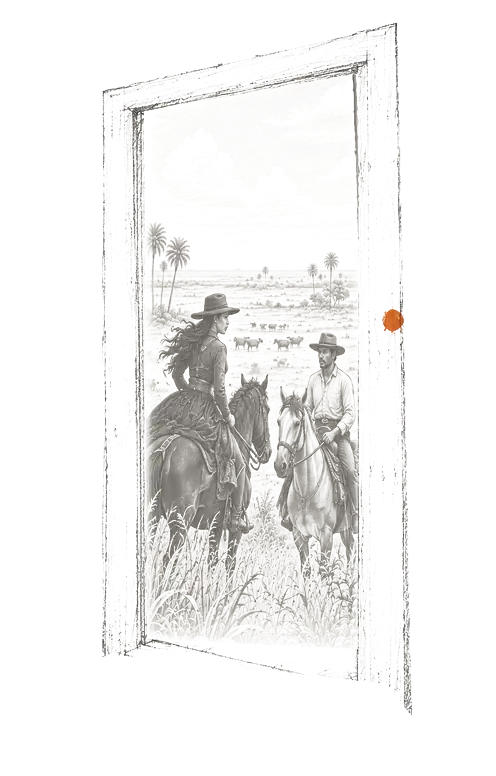
Santos Luzardo, a lawyer trained in Caracas, returns to the plains of Apure to sell Altamira, his family's estate, left abandoned after a long, deadly quarrel between the Luzardos and the Barqueros. He finds the region under the sway of Doña Bárbara, a beautiful and unscrupulous mestiza, the devourer of men, who has taken the neighbouring estate and covets his own, served by a henchman and a bribed foreman. Giving up the idea of selling, Santos sets about restoring Altamira, and finds his cousin Lorenzo Barquero, ruined by her, and Marisela, their daughter, who lives neglected.
Context
Gallegos published the novel in Barcelona, with Araluce, in February 1929, and as early as 1930 brought out a revised second edition, expanded by five chapters; he went on retouching it until 1954. The book, read as a critique of the Gómez regime, forced him to leave the country. Robert Malloy published the English translation in New York in 1931, and Gallegos himself wrote the screenplay of the 1943 Mexican film, with María Félix. It remains a set text for schoolchildren in Venezuela.
Who it is for
A novel in which Santos Luzardo embodies civilisation and Doña Bárbara barbarism; two French translations exist, from Sorlot in 1943 and Gallimard in 1951.
Prizes and reception
In 1974 it was perhaps regarded as the best-known Latin American novel; adapted for cinema, television and opera.
Sources for this page 4
The pages consulted to check this page.