Cape Verde
- works
- 18
- 14 books · 4 films
- period covered
- 1856–1997
- language of writing
- Portuguese and Creole
There are more Cape Verdeans outside Cape Verde than in the archipelago. The repeated droughts and the famines, including those of the nineteen forties which carried off a considerable part of the population, made emigration the normal condition of existence: people leave for New England, the Netherlands, Portugal, Lisbon, Rotterdam, Boston. A national literature was therefore built around one word, sodade, which designates the lack of what one has left behind.
Read moreShow less
These islands were empty before the arrival of the Portuguese in the fifteenth century, and they served as a warehouse for the Atlantic slave trade. Everyone came there, and Cape Verdean Creole was formed on the spot, out of Portuguese and the languages of the Guinean coast, before becoming everyone's language. The country is therefore entirely composed, with no first population and no earlier language, and it has made of that absence a material rather than a lack. It also served as a prison: the Portuguese dictatorship shut its opponents up in the camp of Tarrafal, on the island of Santiago, and writers from other colonies wrote there.
The form that results is contained in a review. In 1936, a group of young men founded in Mindelo a periodical that decided to look at the islands as they are rather than imitate Lisbon, and that decision founds Cape Verdean literature. Jorge Barbosa published in 1935 poems in which the sea is a prison more than a horizon, Baltasar Lopes wrote in 1947 the novel of an adolescent who will have to leave. A century earlier, in 1856, a Portuguese official in the archipelago had already made a slave the subject of a novel. The price was a literature that speaks above all of departure, written by those who stayed.
What awaits the reader is a melancholy without self-indulgence, in which hunger and drought are facts and not symbols. The novel that opens this page tells of a childhood on São Nicolau while drought sets in and ships carry the men away, and it is the first Cape Verdean novel.
A way to begin
Chiquinho
Baltasar Lopes da Silva · 1947
The first Cape Verdean novel, on the archipelago's school syllabus: a childhood on São Nicolau, between school and the departing ships.
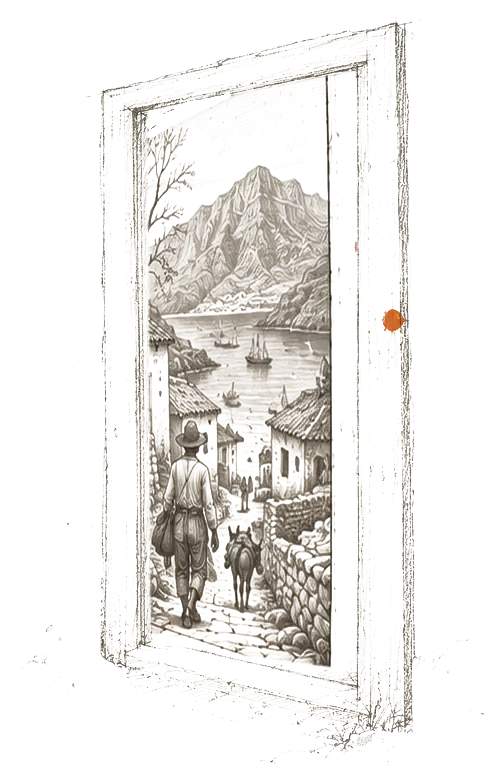
Chiquinho grows up on São Nicolau, between his mother, his grandmother and the wait for letters from his father, gone to America. He discovers books and first loves, then moves to another island for his studies. Drought sets in: harvests fail, people go down to the port, ships carry the men away, and he must decide whether he will stay.
Timeline
- 1856–1935Before ClaridadeJosé Evaristo de Almeida, and Eugénio Tavares with his mornas.
- 1936–1947ClaridadeManuel Lopes, Jorge Barbosa, Baltasar Lopes. Looking at the archipelago, not at Portugal.
- 1962–1981IndependenceOvídio Martins, Corsino Fortes, Orlanda Amarílis, Armênio Vieira.
- 1982Germano de AlmeidaThe Testament of Sr Napumoceno, later filmed in Creole.
- 1987–1996CinemaAntónio Faria adapts Manuel Lopes; Pedro Costa shoots Casa de Lava on Fogo.
Reading keys
- Family names are Portuguese, including for the descendants of slaves to whom they were assigned. A European surname indicates no European ancestry.
- The name of the island of origin counts as much as the family name: being from Santiago, from São Vicente or from Fogo places a character socially and musically.
- Families are often dispersed over several continents, and the uncle from America or Rotterdam is a recurring character.
- The mother alone bringing up her children while the father works far away is an ordinary configuration and not an accident.
- The famines of the nineteen forties, long minimised by the colonial administration, are a central and painful memory.
- Clandestine emigration and forced repatriations are subjects treated by detour.
- Creole was long judged unworthy of writing and its use in a text remains a position taken.
- The distinction between the northern islands and the southern islands, the former judged more European, the latter more African, is a live subject that the texts work on without naming it.
- Catholicism is very much in the majority and structures the village festivals and the pilgrimages.
- Practices of protection and healing, inherited from the Guinean coast, coexist with the mass without declared conflict.
- The souls of the dead and the spirits of places belong to the island creole stock, with a vocabulary that does not translate.
- The cult of island patron saints gives each community its calendar.
- Catholic mourning organises the wake and the anniversary masses, with songs in Creole.
- The morna, sung slowly, is the music of departure and is played at farewells; the coladeira is faster and more biting.
- The island saints' festivals, with their drums and their processions, are the great annual gatherings.
- 5 July, the day of independence in 1975, is the civil landmark.
- The Creole tales collected by Elsie Clews Parsons in 1923, in Creole with a translation, form the most complete documented corpus.
- The mornas of Eugénio Tavares, published in 1932, fixed the sung repertoire and are known to all.
- Sodade and the songs that express it constitute a common reference that the texts never explain.
- The narratives of drought and of the boat that takes people away serve as a shared narrative stock.
- Cape Verde is not an island but an archipelago of ten islands with distinct climates and traditions. Confusing them erases the essential.
- Cape Verdean Creole is not an approximate Portuguese but a language in its own right, with two main variants.
- Sodade is not exactly nostalgia: it designates an active lack, directed towards someone.
- The country's musical image, widely circulated abroad, masks an old and abundant written literature.
Tales and mythologies 1
- TaleFolk-Lore from the Cape Verde IslandsElsie Clews Parsons · 1923Famines have emptied the islands several times, and emigration to New England began in the nineteenth century with the American whalers.Literature
Available in English 2
The books from this country that can be read in English, in the original or in translation.
- NovelChiquinhoBaltasar Lopes da Silva · 1947Drought returns one year in three in an archipelago without a river, and half of the inhabitants live elsewhere; to leave or to stay is the question the country has always asked itself.Literature
- NovelThe Last Will and Testament of Senhor da Silva AraújoO Testamento do Sr. Napumoceno da Silva AraújoGermano de Almeida · 1989The reading of a will several hundred pages long undoes, page after page, the reputation of a tradesman whom a whole town thought it knew.Literature
A selection to begin with 10 / 18
- NovelO escravoJosé Evaristo de Almeida · 1856not translated into EnglishPortugal is then abolishing slavery by stages in its colonies, and final abolition will not come until 1869; the archipelago lives from trade and plantations.Literature
- PoetryMornas - cantigas crioulasEugénio Tavares · 1932not translated into EnglishCreole is then forbidden at school and regarded by the administration as a patois; the elites of the archipelago write in Portuguese.Literature
- PoetryArquipélagoJorge Barbosa · 1935not translated into EnglishAn archipelago of ten islands five hundred kilometres from the mainland, without rivers or industry, where the sea serves less to leave than to remind one that one does not leave.Literature
- PoetryPão & FonemaCorsino Fortes · 1974The archipelago is a year away from independence, and the Portuguese revolution has just opened the way for that of all the colonies.Literature
- Short storiesCais-do-Sodré té SalamansaOrlanda Amarílis · 1974not translated into EnglishCape Verdean emigration to Portugal is then as much a matter for women as for men, and the stories of the archipelago had never been written from that side.Literature
- CinemaOs flagelados do vento lesteAntónio Faria · 1987The wind from the Sahara scorches the crops of the archipelago several years in each decade, and the famines of the twentieth century killed tens of thousands of people there, the last in 1948.Cinema
- NovelThe Last Will and Testament of Senhor da Silva AraújoO Testamento do Sr. Napumoceno da Silva AraújoGermano de Almeida · 1989The reading of a will several hundred pages long undoes, page after page, the reputation of a tradesman whom a whole town thought it knew.Literature
- CinemaDown to EarthCasa de LavaPedro Costa · 1995The men of the archipelago leave to work on building sites in Lisbon, and those whom an accident renders useless are sent back to the island, where no one is waiting for them any more.Cinema
- CinemaIlhéu de ContendaLeão Lopes · 1995The society of the colonial archipelago rests on a hierarchy of land and colour that trade is in the process of undoing, some ten years before independence.Cinema
- CinemaThe Last Will and Testament of Senhor da Silva AraújoO testamento do Senhor NapumocenoFrancisco Manso · 1997Mindelo then lives from the port, coal and the import trade, and a fortune is built there in a single generation without anyone knowing where it comes from.Cinema