Narrative
Down Second Avenue
Es'kia Mphahlele · 1959
Synopsis
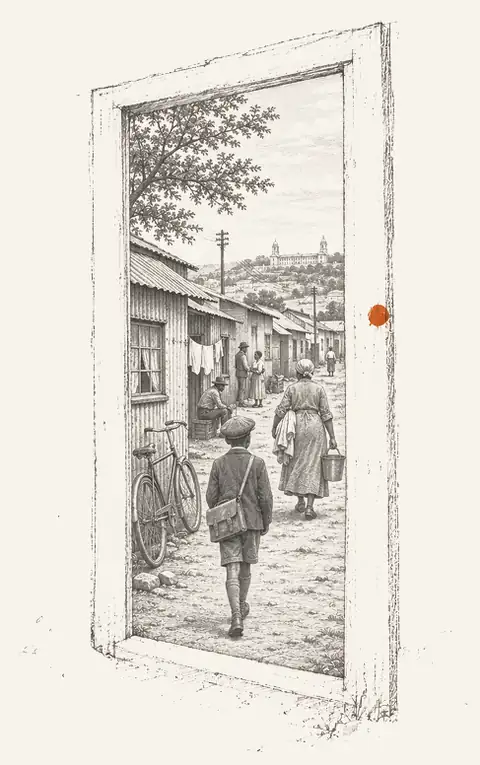
The account of a childhood and youth: the early years in the village of Maupaneng, with his grandmother, then Second Avenue in Marabastad, the black suburb of Pretoria, where his mother is a domestic servant for white families and where Aunt Dora lives. There follow his father's violence, the poverty of a house with a single bed, police surveillance, the humiliation of a child beaten by white boys after a collision on a bicycle, then the school of St Peter's, which leads him to the profession of teacher.
Context
Written during the first years of its author's exile in Nigeria, the book was published in 1959 by Faber and Faber in London and was immediately banned in South Africa. Mphahlele saw in it a form of writing about African life, able to show foreign readers what apartheid did to black lives; the Encyclopædia Universalis sees in it the story of a formative education as much as a social critique. First refused by American publishers, it entered the Penguin Classics in 2013.
Who it is for
An autobiography in English, in a direct, unpolished style; no French translation has been published to date.
Prizes and reception
Regarded as a classic of South African literature, translated into several languages and often studied in American universities.
Sources for this page 2
The pages consulted to check this page.