Novel
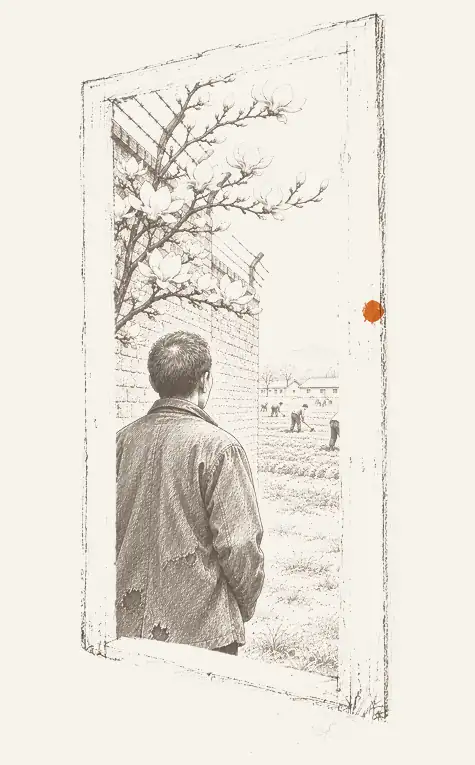
大牆下的紅玉蘭
Not translated into English
Cong Weixi · 1979
Synopsis
At the beginning of spring 1976, Ge Ling, a former head of the prison administration of his province, is thrown into a re-education farm as a “capitalist roader”, without sentence or proceedings. There he faces, without bending, the injustice that has struck him. According to Maigoo, Ma Yulin, the dormitory chief and the son of a landowner whom Ge Ling's work team had once suppressed, hounds him, while the farm's director, Lu Wei, his former comrade-in-arms, tries to protect him.
Context
The text appeared in the second issue of 1979 of the journal Shouhuo, edited by Ba Jin, which placed it first. It opened what was called the “literature of the great walls”, the high wall designating the prison, and Wang Meng made its author the father of this current. The story provoked objections: readers set against it the line of the “two whatevers”, a penal farm wrote to denounce an attack on the dictatorship of the proletariat, and Wenyi bao organised a debate, according to Jiemian; the writer Sun Li came to its defence, and Ba Jin encouraged the author to continue.
Who it is for
A short novel about political prison; it has not been translated separately, either into French or into English.
Prizes and reception
Maigoo regards it as the starting point of the rise of the novella in post-Mao China.
Sources for this page 5
The pages consulted to check this page.