Afghanistan
- works
- 38
- 35 books · 3 films
- period covered
- 1484–2000
- language of writing
- Persian
There exists in Pashto a poetic form of two lines, twenty-two syllables in all, that is composed and recited without being signed. The landay is passed on among women, in the fields, at weddings, around the well, and it very often says what nothing else says: desire, the imposed husband, the war, hatred of the brother who keeps watch. Since it has no author, it cannot be held against anybody. Folklorists have collected thousands of them, and they probably constitute the freest speech in the country. Some are funny, many are obscene, a few are threats.
Read moreShow less
That protective anonymity throws light on a particular literary situation. Afghanistan has two languages of culture, Persian in its Dari variant and Pashto, and a long written tradition in Persian: Bidel, a seventeenth-century poet born in Patna and read from Delhi to Bukhara, has an immense posterity in Central Asia and almost none in Europe. Khushhal Khattak, a Pashtun war leader of the same century, wrote between two campaigns poems about pleasure and betrayal. The library exists, it is mostly in verse, and it is made of collections.
The price has been paid over forty-five years without interruption. The war since 1979, the successive regimes, the exile of almost all the writers, the closure of the universities and the cinemas: Afghan cinema, born in 1946 and active in the nineteen seventies, was destroyed and then reconstituted from hidden reels. Spôjmaï Zariâb, who published in 1988 narratives about ordinary violence, writes today from France, like most of her contemporaries.
What awaits the reader is a mostly poetic literature, in which brevity is a technique of survival and allusion a politeness, and in which the word divan designates a collection and not a piece of furniture. The collection that opens this page gathers thirteen stories by an Afghan woman writer, written under Soviet occupation and published first in French, before any Persian edition.
A way to begin
دشت قابیل
Spozhmai Zaryab · 1988
Thirteen stories by Spôjmaï Zariâb, first published in French: nightmares on the edge of the fantastic in a nameless Afghan city.
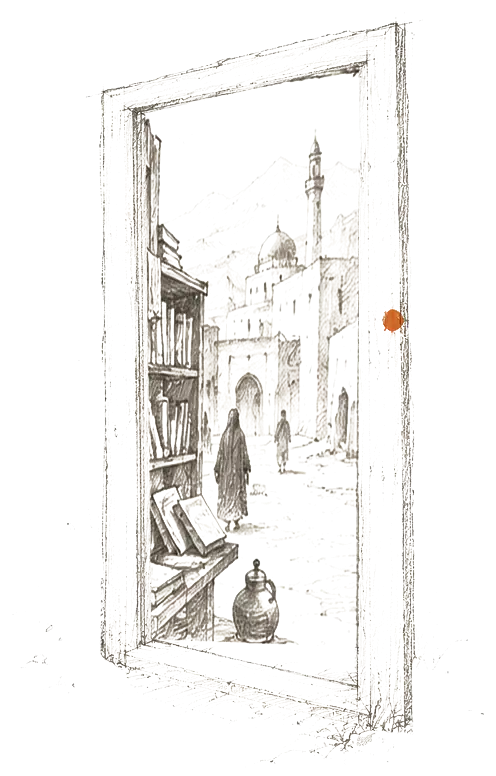
The stories are arranged under two headings, woman and life, woman and death. In an almost deserted city that is never named, a fairground man searches desperately for children, a mad bookseller harangues passers-by, a dancer shakes her bells, and a woman, Aïcha, suffers the violence of a figure in a black robe.
Timeline
- 1670–1790Classical poetryBidel in Kabul, Khushhal Khattak in Pashto: two languages, two traditions.
- 1850–1950The divansDozens of manuscript collections, often never printed.
- 1946–1974First filmsRashid Latif, Daoud Farani, Wali Latifi. A rare and fragile cinema.
- 1972–1988War and exileMajrouh, then Spôjmaï Zariâb, writing Afghanistan from France.
Reading keys
- The name indicates the language and often the group: Persian-speaking Dari names are distinguishable from Pashtun names in -zai, -khel or Khan.
- The Pashtun tribe and sub-clan organise alliances, and Pashtunwali, a customary code with its obligatory hospitality, its protection of the guest and its vengeance, is a parallel legal framework.
- The Hazaras, Shia and long despised, the Tajiks, the Uzbeks and the Turkmens have their own names and their own literature.
- Women are rarely named in public, including in death notices, which explains the importance of anonymous forms.
- The war since 1979, the successive regimes and the responsibilities of each are subjects on which every account is situated and sometimes dangerous.
- The condition of women is the most constrained subject, and writing it from within has become almost impossible.
- The fate of the Hazaras and the massacres of which they have been victims are little approached outside their own production.
- Family honour commands silence about what concerns the women of the house, and the landay exists precisely because it circumvents that rule.
- Hanafi Sunni Islam is in the majority, with a Hazara Shia minority and an Ismaili one in the north-east.
- Sufism is very present, with brotherhoods and visited tombs of saints, including the one attributed to Ali at Mazar-i-Sharif.
- The jinn belong to Quranic cosmology, and practices of protection against the evil eye are universal.
- The country was a major Buddhist centre until the ninth century, to which the statues of Bamiyan, destroyed in 2001, bore witness.
- Muslim mourning is brief, with burial on the same day, three days of condolences and a commemoration on the fortieth.
- The white of the shroud and the black of mourning coexist according to the region.
- Nowruz, the new year of 21 March, is celebrated despite the successive prohibitions, with the fair of Mazar-i-Sharif.
- Green tea and the cloth laid on the ground, the dastarkhan, organise hospitality and the conversation scenes.
- Ferdowsi's Book of Kings, whose hero Rostam is lord of Sistan and Zabulistan, Afghan regions, is a stock shared with Iran.
- The landay, anonymous couplets composed by women, are a recognised and published oral heritage.
- The religion of the Kafirs of the Hindu Kush, described in 1896 just before their forced conversion, is the only direct testimony about a polytheism now vanished.
- The Pashto narratives collected in the nineteenth century by British orientalists form the old documented corpus.
- Afghanistan is not a Pashtun country: the Pashtuns are the first group, not the majority, and Dari is the lingua franca.
- Pashtunwali is not a folklore but a customary law with its procedures, sometimes in competition with sharia.
- Afghan literature is mostly in verse, and looking for novels there gives a false picture.
- Rumi, often presented as Persian or Turkish, was born in Balkh, in present-day Afghanistan, and the country claims him.
Tales and mythologies 1
- PoetrySongs of Love and WarلنډۍAnonymous · 1988The Pashtun valleys on either side of the border, and the refugee camps of Peshawar in the eighties.Literature
Available in English 2
The books from this country that can be read in English, in the original or in translation.
- PoetryPoems from the Divan of Khushhal Khan KhattakدیوانKhushal Khattak · 1680The valleys between Peshawar and Kabul in the seventeenth century, where men fight against the Mughal empire and where the learned language is not the one spoken.Literature
- NovelEarth and Ashesخاکستر و خاکAtiq Rahimi · 2000An old man and his grandson, now deaf, wait on an Afghan road, bearers of terrible news.Literature
A selection to begin with 10 / 38
- Poetryطلسم حیرتMirza Abdul Qadir Bedil · 1669not translated into EnglishMughal India of the late seventeenth century, where poetry is written in Persian that Iran will long judge unreadable.Literature
- PoetryPoems from the Divan of Khushhal Khan KhattakدیوانKhushal Khattak · 1680The valleys between Peshawar and Kabul in the seventeenth century, where men fight against the Mughal empire and where the learned language is not the one spoken.Literature
- Short filmLove and Friendshipعشق و دوستیRashid Latif · 1946Kabul and Lahore in the mid-forties, before Afghanistan had a studio of its own.Cinema
- PoetryدیوانAbdul Ali Mustaghni · 1955not translated into EnglishKabul at the turn of the twentieth century, when court poetry opens itself to ideas of progress.Literature
- Poetryمجموعهٔ اشعارPayenda Muhammad Farhat · 1960not translated into EnglishKabul in the middle of the twentieth century, where the Indian style keeps its faithful.Literature
- PoetryچونغرSulaiman Layeq · 1962not translated into EnglishKabul in the early sixties, when the author is working at the national radio.Literature
- Poetryاژدهای خودیSayed Bahauddin Majrouh · 1973not translated into EnglishA fable in verse and prose about power, begun in the Kabul of the seventies and completed in exile.Literature
- Feature filmRabia Balkhiرابعه بلخیAbdul Khaliq Alil and Toryali Shafaq · 1974The court of Balkh in the tenth century, recreated in 1974 by the Afghan state cinema.Cinema
- Feature filmDifficult Daysروزهای دشوارWali Latifi · 1974Kabul in 1974, when the country begins to shoot its own fiction films.Cinema
- NovelEarth and Ashesخاکستر و خاکAtiq Rahimi · 2000An old man and his grandson, now deaf, wait on an Afghan road, bearers of terrible news.Literature