Mozambique
- works
- 22
- 18 books · 4 films
- period covered
- 1897–1994
- language of writing
- Portuguese
It is the only national flag in the world that carries a Kalashnikov. Mozambique placed on it, beside a hoe and an open book, an assault rifle, and it kept it there after the war, after the parliamentary debates and after the proposals to remove it. The country became independent in 1975 after thirteen years of armed struggle, and went straight on to sixteen years of civil war. The flag says what the literature also says: here, recent history is not set aside, and the open book appears on it on equal terms with the weapon.
Read moreShow less
The question of language takes a singular form there. Portuguese is the official language of a country where it is the mother tongue of only a small minority, and where some twenty Bantu languages are spoken. Authors therefore made the opposite choice to the one that might be expected: rather than writing in the local languages, they set about fabricating a Mozambican Portuguese, injecting into it the structures, the images and the rhythms of the country's languages. The result is neither Portuguese nor Bantu, and it is spoken nowhere.
Mia Couto pushed that operation furthest. He invents words, welds verbs together, turns proverbs around, and his prose resembles a language in the course of formation rather than a style. Before him, José Craveirinha had given his collection of poems a title in Ronga, a formula that opens tales as the French "once upon a time" does. The price is to be found in Lina Magaia, who published in 1987 dry narratives about the atrocities of the civil war, and in Ruy Guerra's film about a colonial massacre reconstructed by its survivors.
What awaits the reader is a Portuguese that no Portuguese writer would write, in which the marvellous and the disaster are said in the same sentence. The collection that opens this page gathers twelve stories written at the height of the civil war, and their Portuguese draws on the vocabulary of the country's regions.
A way to begin
Voices Made Night
Mia Couto · 1986
Mia Couto's first book of stories, written at the height of the civil war: the one that made him known outside Mozambique.
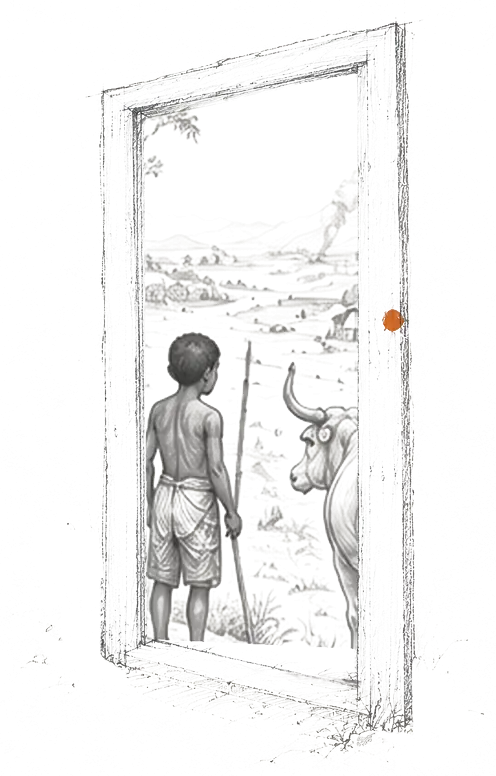
Twelve stories in which marginal figures, caught in war and poverty, tell tales bordering on the marvellous and the absurd. An old man tells his wife he must start digging her grave, though she is not ill; the finest ox a young orphan tends steps on a mine, and the boy flees into the bush; another man waits for a whale whose mouth will pour out food.
Timeline
- 1946–1960Before the struggleRui de Noronha, Noémia de Sousa. Poetry already speaks of skin colour.
- 1964–1974Poetry of the struggleCraveirinha, Rebelo, and Honwana's We Killed Mangy-Dog.
- 1979MuedaRuy Guerra films the 1960 massacre, re-enacted by those who lived it.
- 1986–1990After independenceMia Couto invents his language; Ba Ka Khosa, Lina Magaia, Chiziane.
- 1992–2000Civil war and afterRibeiro, Azevedo. Cinema starts again with documentary.
Reading keys
- Names mix Portuguese and the Bantu languages, and several authors took a pen name in a local language: Ungulani Ba Ka Khosa, Mia Couto.
- The north of the country, Makhuwa and Swahili, is matrilineal; the south, Tsonga and Ronga, is patrilineal. That line divides the country and determines who inherits.
- The lobolo, the payment made by the groom to the bride's family, is a central element of the narratives of the south.
- The name indicates the region and sometimes the political camp during the civil war.
- The civil war from 1977 to 1992 and the atrocities committed by both camps form a subject that literature addresses head-on but whose political responsibility is little discussed.
- The colonial massacres, including that of Mueda in 1960, are recounted by the survivors and reconstructed in the theatre and in the cinema.
- The xiconhoca, the official term designating the internal enemy during the socialist years, says everything about the surveillance of the period.
- The curandeiro, healer, and the accusation of sorcery are social realities with real consequences.
- Christianity in the south and the centre, Islam on the northern coast for centuries, ancestral cults everywhere beneath them.
- The spirits of the dead manifest themselves through possession, and the curandeiro interprets them. A trance scene is not a scene of madness.
- The cult of M'bona and the rain shrines of the centre of the country are ancient religious institutions.
- The northern coast belongs to the Swahili world and to the Islam of the Indian Ocean, which radically distinguishes it from the south.
- Funerals include a wake, a burial, then a deferred ceremony that releases the spirit of the dead person.
- Widowhood imposes rites of purification on the woman, described in several novels.
- The capulana, a piece of cloth worn by women, serves as a garment, a baby carrier and a shroud, and its patterns can be read.
- Marrabenta, the urban music of Maputo, and the timbila, a Chopi xylophone listed by UNESCO, are the two musical references.
- The Ronga songs and tales collected by Junod in 1897, with the melodies noted down, form the founding documented corpus.
- The Ronga formula karingana ua karingana, which opens tales, is known to all and gave Craveirinha's great collection its title.
- Ngungunhane, the last emperor of Gaza, deported to the Azores in 1895, is the most discussed historical reference.
- The narratives of war, of displacement and of mines constitute a shared narrative stock.
- Mozambique is not a homogeneous country: the northern coast is Swahili and Muslim, the south is Tsonga and Christianised, and the two are not read in the same way.
- Mia Couto's Portuguese is not a faulty writing but a deliberate invention that translations try to reproduce.
- The Kalashnikov on the flag is not a historical accident but a maintained and debated choice.
- The matrilineality of the north entirely changes the reading of family relations in the narratives set there.
Tales and mythologies 1
- TaleLes Chants et les contes des Ba-RongaHenri-Alexandre Junod · 1897not translated into EnglishThe songs and tales of the Ronga people, recorded at the end of the nineteenth century by a Swiss missionary.Literature
Available in English 4
The books from this country that can be read in English, in the original or in translation.
- Short storiesWe Killed Mangy-Dog and Other StoriesNós matámos o Cão-TinhosoLuís Bernardo Honwana · 1964Stories of a Black childhood in a colonial suburb, written by an activist in his twenties.Literature
- Short storiesVoices Made NightVozes anoitecidasMia Couto · 1986Its author's first book of short stories, written at the height of the civil war in Mozambique.Literature
- NovelUalalapi: Fragments from the End of EmpireUalalapiUngulani Ba Ka Khosa · 1987The last emperor of Gaza, raised to national hero by the regime of independence, shown as a despot.Literature
- NarrativeDumba Nengue: Run for Your LifeDumba Nengue: histórias trágicas do banditismoLina Magaia · 1987Peasant testimonies gathered in the middle of the war by a former fighter turned agricultural official.Literature
A selection to begin with 10 / 22
- Short storiesWe Killed Mangy-Dog and Other StoriesNós matámos o Cão-TinhosoLuís Bernardo Honwana · 1964Stories of a Black childhood in a colonial suburb, written by an activist in his twenties.Literature
- PoetryKaringana ua karinganaJosé Craveirinha · 1974not translated into EnglishPoems that take up the speech of the Ronga storytellers, published in Lourenço Marques the year before independence.Literature
- Feature filmMueda, Memory and MassacreMueda, memória e massacreRuy Guerra · 1979The popular reconstruction of a colonial massacre, filmed by a filmmaker who returned from Brazil after independence.Cinema
- PoetrySilêncio escancaradoRui Nogar · 1982not translated into EnglishThe poems of an activist whom the colonial political police had imprisoned, published after independence.Literature
- PoetryAmar sobre o ÍndicoEduardo White · 1984not translated into EnglishThe first collection of a poet from Quelimane, an amorous and maritime voyage written in the midst of civil war.Literature
- Feature filmTime of the LeopardsO Tempo dos LeopardosZdravko Velimirović · 1985A Mozambican and Yugoslav war film on the Frelimo resistance, based on accounts collected by Licínio Azevedo.Cinema
- NarrativeDumba Nengue: Run for Your LifeDumba Nengue: histórias trágicas do banditismoLina Magaia · 1987Peasant testimonies gathered in the middle of the war by a former fighter turned agricultural official.Literature
- NovelUalalapi: Fragments from the End of EmpireUalalapiUngulani Ba Ka Khosa · 1987The last emperor of Gaza, raised to national hero by the regime of independence, shown as a despot.Literature
- Short filmBonfireFogataJoão Ribeiro · 1992A short story by a Mozambican writer brought to the screen in eighteen minutes, as the war was coming to an end.Cinema
- CinemaThe Tree of AncestorsA Árvore dos AntepassadosLicínio Azevedo · 1994The return of a family of refugees to their village, filmed as the civil war ended.Cinema