Serbia
- works
- 54
- 42 books · 12 films
- period covered
- 1783–1985
- language of writing
- Serbian
In 1984 a novel in the form of a dictionary appeared in Belgrade, with three lexicons and entries to be consulted in whatever order one likes. Milorad Pavić published it in two versions, one called masculine, the other feminine, which differ by a single passage. Nobody can therefore read the whole book alone. One has to find someone who owns the other copy, and talk to them.
Read moreShow less
The idea is not gratuitous in a country whose literature began with the voice. The songs collected at the beginning of the nineteenth century fascinated Goethe and the Brothers Grimm before Serbia had printers, and the ten-syllable line of the gusle players left its cadence in the prose. Vuk Karadžić also reformed the alphabet on a principle of provocative simplicity, write as you speak, so that Serbian is spelled without traps and the written language remains a tracing of the voice. Hence a lasting taste for digression, reported speech, the story one has from someone who had it from someone else.
Hence too the form that Serbia has carried furthest: satire. Radoje Domanović published in 1901 a tale in which a people chooses a blind man as its guide and follows him to the precipice. Nušić staged in 1929 a minister's wife and her relatives hungry for posts. Then the film-makers of the Black Wave, in the nineteen sixties and seventies, applied the same mechanism to the socialist present. Makavejev's film on orgasm and revolution was banned in Yugoslavia and its author left the country. The comedy was paid for, and Aleksandar Petrović, awarded a prize at Cannes for a film shot with Roma actors speaking their own language, ended up removed from teaching.
What awaits the reader or the viewer is a constant mixture of the burlesque and the massacre, a gaiety that never cancels the horror and does not apologise for itself. The book that opens this page makes seven lives of revolutionaries crushed by the machine they served into the chapters of a single story, and it brought its author an accusation of plagiarism as soon as it appeared.
A way to begin
A Tomb for Boris Davidovich
Danilo Kiš · 1976
Seven lives of revolutionaries crushed by the machine they served, told the way one assembles a file.
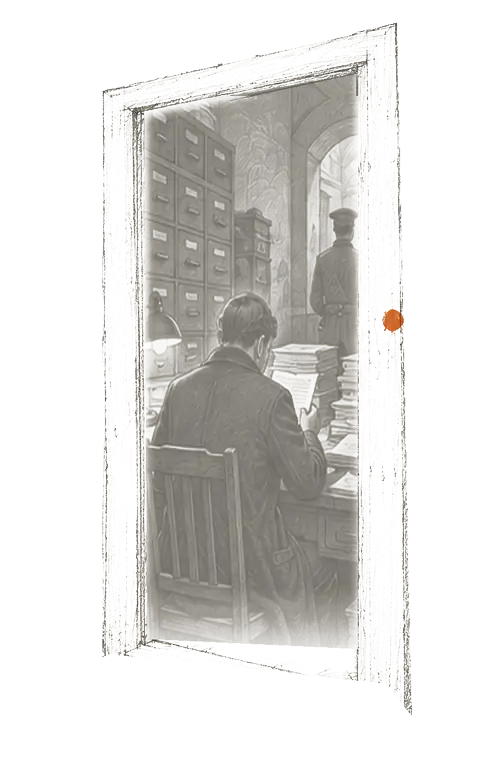
Seven stories presented as the seven chapters of a single story: a young revolutionary woman killed with a knife, then lives caught between clandestinity, the underworld and the circles of power, in the Eastern Europe of the first half of the twentieth century, where invented characters cross paths with real figures.
Timeline
- 1800–1850Language reformObradović, then Karadžić: write as you speak.
- 1864–1910Realists and poetsZmaj, Kostić, Stanković. Serbia tells itself between village and town.
- 1920–1935Between the warsCrnjanski, Dučić, Nušić. Belgrade joins literary Europe.
- 1950–1972Postwar YugoslaviaPopa, Pavlović, Kiš. Poetry breaks out of socialist realism.
- 1961–1990Black Wave and afterPavlović, Makavejev, Petrović, then Kusturica.
Reading keys
- Serbian is written in Cyrillic and in Latin script, both alphabets being official. The same author appears in two spellings, Данило Киш and Danilo Kiš, which complicates searches.
- Names often end in -ić or -ović. The names of married women are not declined like those of men.
- The slava, the feast of the family's patron saint and not of the individual, passes from father to son and is celebrated every year. Missing one's family slava is serious.
- The kum, godfather, takes part in family decisions and his role goes well beyond baptism.
- The wars of the nineteen nineties and the crimes committed in the name of Serbia are a subject of internal division. The works that address them often do so through farce or by a detour.
- The Black Wave of nineteen-sixties cinema was attacked for "black pessimism" and several films were withdrawn. Irony served there as a smuggler's language.
- Things are said directly, and a lively conversation is not a conflict. Restraint may be read as coldness or contempt.
- Hospitality is obligatory and abundant. Refusing what is offered requires a negotiation.
- Orthodoxy is in the majority, the Julian calendar is still followed for the feasts, so that Christmas falls on 7 January. A narrative may therefore place Christmas in January without error.
- The funeral ritual extends over years: wake, forty days, one year, then commemorations. Boiled wheat, žito, accompanies these moments.
- The vile, vampires and revenant dead belong to the village stock. The word vampire itself entered the European languages from this region.
- The monastery is a political as much as a religious place, and the mention of a Kosovo monastery is rarely neutral.
- Black is the colour of mourning and is worn for a long time.
- The family slava, with its bread and its candle, is the central domestic rite. A slava scene in a novel places a whole family socially.
- The New Year is celebrated twice, on 1 and 14 January, because of the gap between the calendars.
- The gusle, a one-stringed instrument, accompanies the epic. Its presence in a scene indicates a solemn register or an identity claim depending on the context.
- The Serbian popular songs collected by Vuk Karadžić, including the Kosovo cycle and the songs of Filip Višnjić, a blind guslar: common material and a school reference.
- Prince Lazar choosing the heavenly kingdom rather than the earthly one before the battle of 1389, a founding episode taken up endlessly.
- Kraljević Marko, a hero both valiant and a vassal of the Ottomans, an ambivalent figure who runs through the whole epic stock.
- Karadžić's tales and the village realism of Glišić and Lazarević make up the second tier of references.
- The Kosovo cycle is not a warlike narrative in its form: it is a celebration of sacrifice and of accepted defeat. Reading it as a call to arms is a twentieth-century reading, not a fourteenth-century one.
- The black humour of the Serbs is not cynicism. It works as a politeness, a way of not imposing one's complaint.
- The violence of the nineteen nineties is an internal subject of Serbian literature, not its key. The catalogue begins in 1800.
- Kraljević Marko often serves as a national emblem although his songs show him brutal, drunk and submissive. Serbs know this and own it.
Tales and mythologies 1
- PoetrySongs of the Serbian PeopleСрпске народне пјесмеVuk Stefanović Karadžić · 1814A collection of oral songs that served two causes at once: giving Serbian an orthography and a written literature, and providing a nation in the process of rising up with a past it could recite.Literature
A selection to begin with 10 / 54
- Short storiesThe LeaderВођаRadoje Domanović · 1901A political satire of 1901 in which a whole people follows a man about whom it knows nothing, because he seems to know where he is going.LiteraturePublic domain
- TheatreThe Cabinet Minister's WifeГоспођа министаркаBranislav Nušić · 1929A 1929 comedy about a housewife made insufferable by her husband's appointment to the government.LiteraturePublic domain
- NarrativePeople TalkЉуди говореRastko Petrović · 1931A short narrative of 1931 in which a traveller who has landed on an island in a lake does nothing but listen to the local people.Literature
- PoetryBarkКораVasko Popa · 1953A 1953 collection that breaks with the poetry of socialist realism through short poems, without lyricism or confidences.Literature
- CinemaI Even Met Happy GypsiesСкупљачи перјаAleksandar Petrović · 1967The first feature film shot in Romani, performed by Roma of Vojvodina in their own language and, for the most part, in their own roles.Cinema
- CinemaWR: Mysteries of the OrganismW.R. – Мистерије организмаDušan Makavejev · 1971A 1971 collage that puts sex and politics in the same frame and dismisses both Cold War blocs alike.Cinema
- CinemaWho's Singin' Over There?Ко то тамо певаSlobodan Šijan · 19801980 comedy: a coach, a country road, and the eve of the day the war arrives.Cinema
- CinemaVariola VeraВариола вераGoran Marković · 1982A 1982 film that reconstructs the last smallpox epidemic in Europe, which had arrived ten years earlier and was long passed over in silence.Cinema
- CinemaBalkan ExpressБалкан експресBranko Baletić · 1983A comedy about the occupation that reverses the partisan film: people survive by their wits and sing a great deal.Cinema
- NovelDictionary of the KhazarsХазарски речникMilorad Pavić · 1984A novel of 1984 in the form of a dictionary, leaving the reader to put it in order.Literature